
Blog
Lebanese seven spices: what’s inside and how to cook with it
Lebanese seven spices (sabaa baharat, سبع بهارات) is a warm, fragrant blend that seasons most savoury dishes in a Lebanese home. It isn’t hot. It tastes rounded and slightly sweet, with allspice and black pepper usually leading, then cinnamon, clove and nutmeg in the background.
If you cook kibbeh, stuffed vegetables or rice with minced meat, you have almost certainly tasted it, even if you never saw the jar.
What is in seven spices?
There’s no single official recipe. Every family and every producer has its own balance. Most Lebanese versions are built from spices like these:
- Allspice (bhar helo, بهار حلو): the backbone, with notes of clove, cinnamon and pepper in one berry
- Black pepper: warmth and bite
- Cinnamon: sweetness and aroma
- Cloves: deep and slightly medicinal; a little goes a long way
- Nutmeg: soft and nutty
- Coriander seed: citrusy and light
- Ginger, cardamom or fenugreek: each appears in some family blends
Because the name says “seven”, people expect exactly seven ingredients. In practice, the name is about the idea of a complete, balanced mix rather than a strict count.
How Lebanese seven spices differs from other baharat
“Baharat” simply means “spices” in Arabic, so many countries have a blend with that name. Gulf baharat often leans on black lime, cumin and paprika for stews and kabsa. Turkish and Syrian mixes may add more chilli or cumin. The Lebanese style stays warm and sweet-spicy, with almost no heat, so it never covers the taste of the meat or vegetables.
What to cook with seven spices
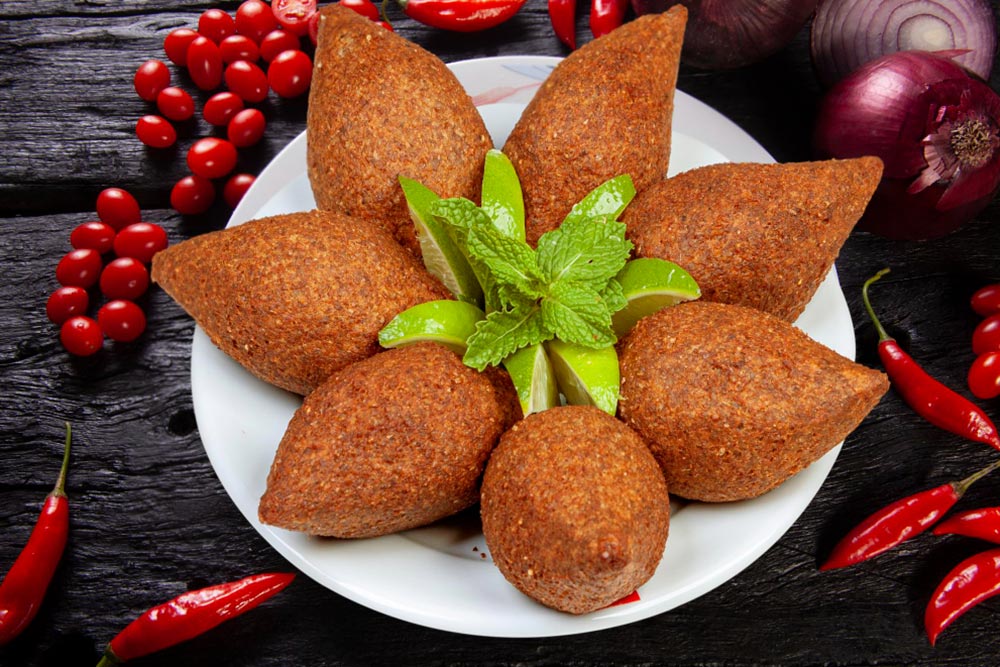
- Kibbeh: raw (nayeh), baked in a tray or fried. Many cooks use seven spices in the filling and a separate kibbeh spice in the shell. See Kebbeh Spices.
- Hashweh: rice with minced meat, onions and toasted pine nuts, served with chicken or stuffed into vegetables.
- Mehshi: stuffed courgettes, aubergines and vine leaves with a meat-and-rice filling.
- Kafta: minced meat with parsley and onion, grilled or baked with potatoes and tomatoes.
- Stews (yakhneh): green beans, peas or okra with meat in tomato sauce.
- Lentil and bean dishes: a pinch adds depth to mjadara or a winter soup.
How much to use
As a home guide, start with about 1 teaspoon of seven spices per 500g of minced meat, or per 2 cups of uncooked rice. Taste and adjust next time. Add it early, when you fry the onions or the meat, so the spices bloom in the fat.
Seven spices or single spices?
The blend saves time and keeps your seasoning the same every time. Keep single allspice and cinnamon too if you like to push one note forward, for example extra cinnamon in a meat-and-rice dish for a celebration.
Keeping it fresh
Ground spices lose aroma faster than whole ones. Close the pack tightly after each use and store it away from the stove, sunlight and steam. If the blend no longer smells strongly when you rub a pinch between your fingers, it is time for a new pack.
Where to find Daaboul Sons Seven Spices
Daaboul Sons Seven Spices comes in a 50g sachet. To order or ask about retail and distribution in Lebanon, contact us on WhatsApp at +961 78 827 365.
 Jars
 Nuts
 Packets
 Sachet